Back to Selected Works
Reflection & Musing
Imaginary Recipes for Understanding / 理解的想像配方
Author: Raymond Ku
|
To capture the essence of a person or a place is never simple. Journalists try by asking ten well-chosen questions; photographers, by waiting for the right light and angle. Each method distills a life into fragments — a few chosen notes from an infinite composition. Yet that’s often how we begin to appreciate anything in this hurried world: through glimpses, through essence-seeking.
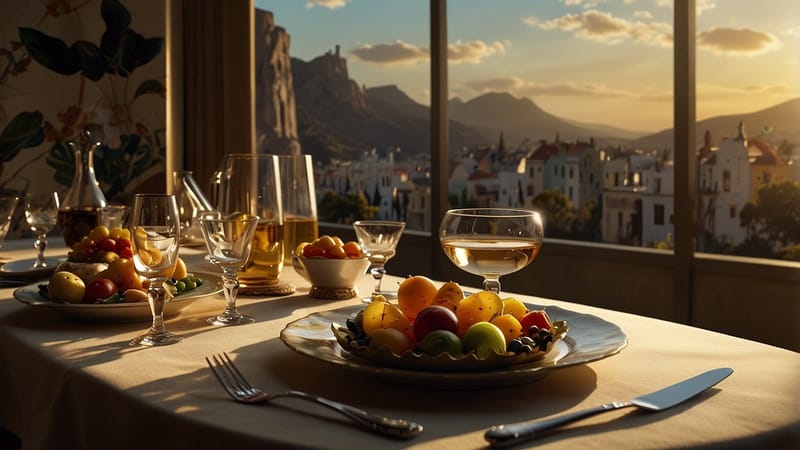
I thought about this while leafing through Dalí’s Les Dîners de Gala, his famously extravagant cookbook. Every page dazzles — lobster pyramids, gilded truffles, impossible sauces that require a small orchestra of ingredients. I know I’ll never cook most of them. But the images alone, the imagined aroma, the delirious sense of abundance — they make my senses come alive. The act of imagining becomes a form of savoring.
Maybe that’s how we come to know people and places, too. We can’t gather every ingredient that makes a person who they are, or a city what it means to those who live there. Some flavors are hidden, some unfamiliar, some too rare for our reach. So we taste what we can, invent the rest, and create a dish that satisfies not the stomach but the heart’s curiosity.
In that sense, every act of appreciation — whether of a meal, a stranger, or a landscape — is a kind of cooking. We mix what we perceive with what we imagine. And when done with care, even our imperfect recipes can reveal something nourishing: the joy of discovering flavor in the mystery itself.
要捕捉一個人或一個地方的神髓,從來不是一件簡單的事。記者試著用十個精心挑選的問題來做到;攝影師則等待最恰當的光線與角度。每一種方法,都像是從一首無窮無盡的樂章中,擷取幾個經過選擇的音符,將一段生命濃縮成片片段段。然而,在這個匆忙的世界裡,我們對任何事物的欣賞,往往正是這樣開始的:從驚鴻一瞥開始,從尋找它的神髓開始。
翻閱達利(Dalí)的《Les Dîners de Gala》時,我想到了這件事。那是他那本以極盡奢華而聞名的食譜。每一頁都令人目眩神迷——堆疊成塔的龍蝦、鍍金般華麗的松露,還有那些彷彿需要一整支小型交響樂團般繁多食材才能調製出的不可思議醬汁。我知道,其中大部分的菜餚,我這輩子大概都不會真的去做。然而,光是那些圖片、想像中的香氣,以及那種近乎狂歡般豐盛奢華的感覺,就足以讓我的感官活躍起來。原來,想像本身,也可以成為一種品味。
也許,我們認識一個人、一個地方,也是如此。我們不可能蒐集齊全所有構成一個人的「材料」,也無法完全掌握一座城市對生活其中的人究竟意味著什麼。有些滋味隱藏得太深,有些對我們而言太過陌生,有些又太過稀有,遠非我們所能觸及。於是,我們品嚐自己能夠品嚐的部分,其餘的便交給想像,再用這一切烹調出一道菜。它所滿足的,不是胃口,而是心靈的好奇。
從這個意義上說,每一次欣賞——無論面對的是一道菜、一個陌生人,還是一片風景——其實都是一種烹調。我們把自己感受到的,與自己想像出來的,調和在一起。只要用心,即使我們的食譜並不完美,仍然可以從中得到某種滋養——那就是在神祕與未知之中,發現滋味的喜悅。